Rijkswaterstaat
Rijkswaterstaat Westraven Circulair & Human-Centred Workplace Design
A workplace shaped around rhythm, clarity and human experience
This proposal reimagines a full project floor in Rijkswaterstaat’s Westraven building as a balanced, intuitive and future-ready werkomgeving. Developed with Ahrend, the design responds to the complexity of a large organisation where teams move continuously between deep concentration, structured collaboration and informal alignment.
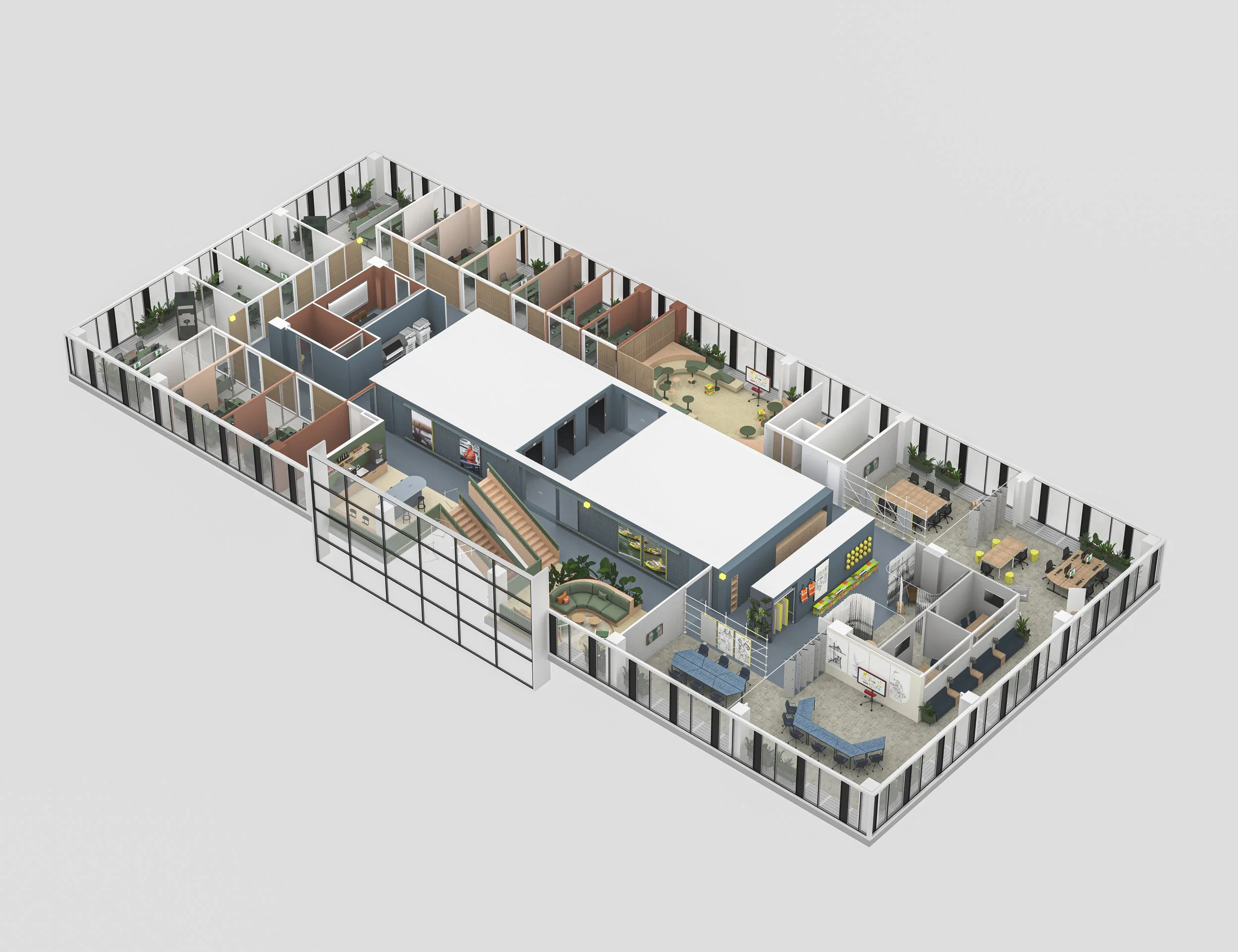
Our aim was to create a workplace with a clear spatial rhythm: environments with distinct purposes that feel intuitive to navigate and comfortable to inhabit. Three zones - co-creation, buffer and focus - provide the foundation. They guide movement, reduce friction and allow teams to work in the way their task demands.
Material warmth, natural acoustics and controlled sightlines reinforce a sense of calm, making the workspace feel grounded and human at any moment of the working day
The Design
At the heart of the design is a clear, legible zoning framework that supports both dynamism and concentration.
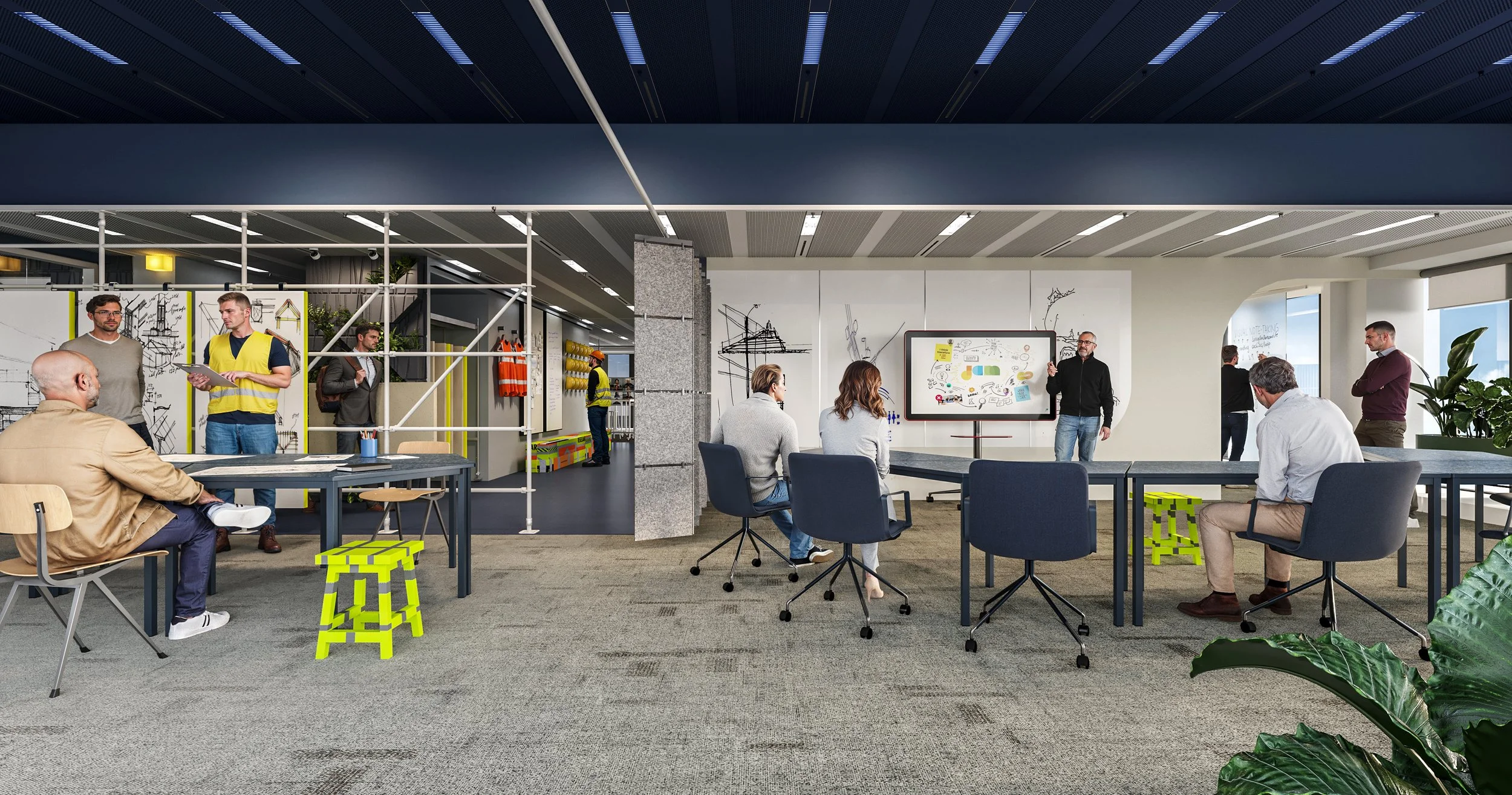
Co-Creation Zone
A flexible workshop environment that accommodates multidisciplinary teams.
A custom-designed steigerframe supports mobile whiteboards, acoustic panels and display surfaces, enabling quick reconfiguration - from open collaboration to concentrated project work.
Buffer Zones
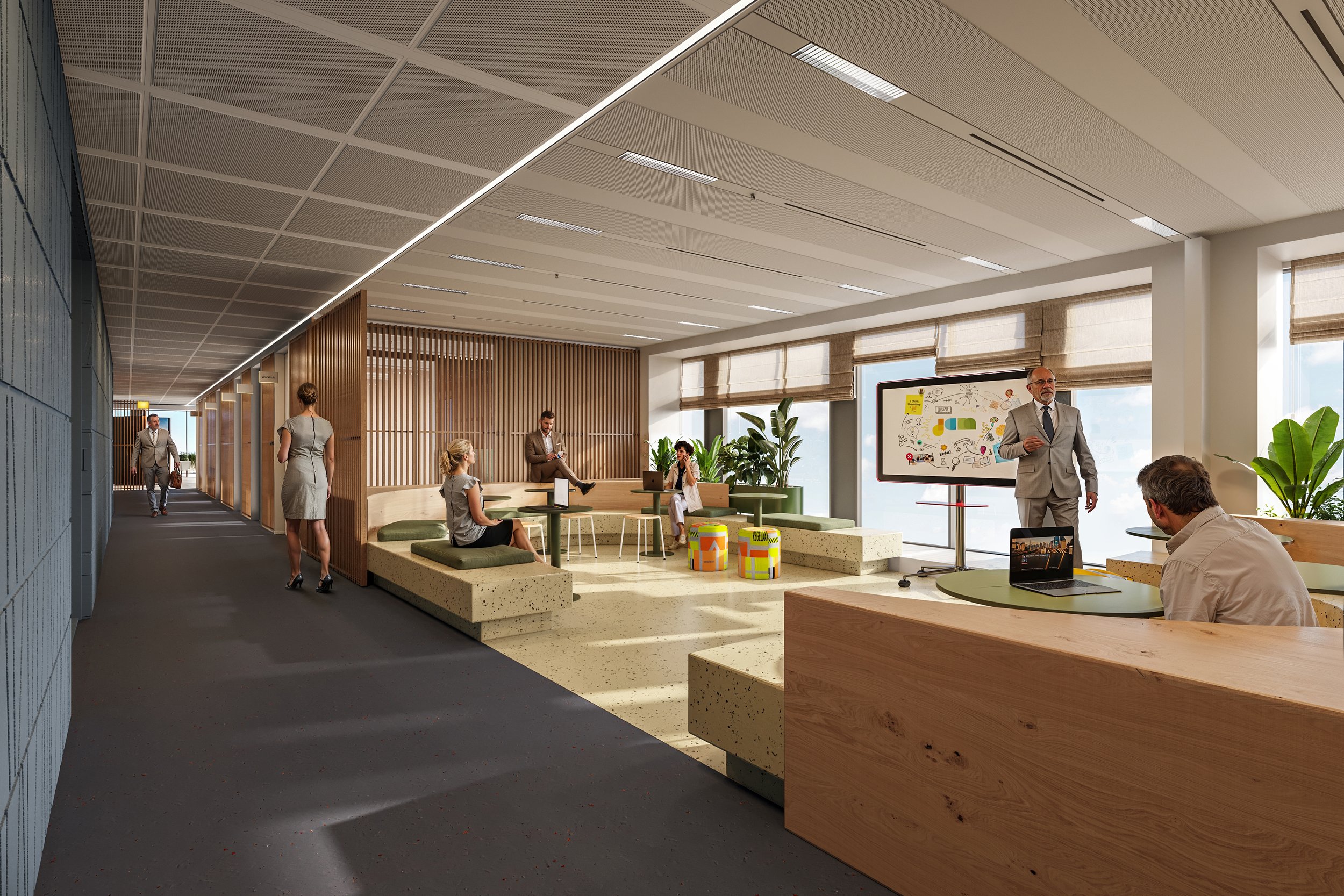
The social hub and forum are warm, welcoming spaces positioned at the intersection of work modes.
They encourage informal contact, arrival rhythms and spontaneous conversations, the small interactions that strengthen team culture.
Focus Zone
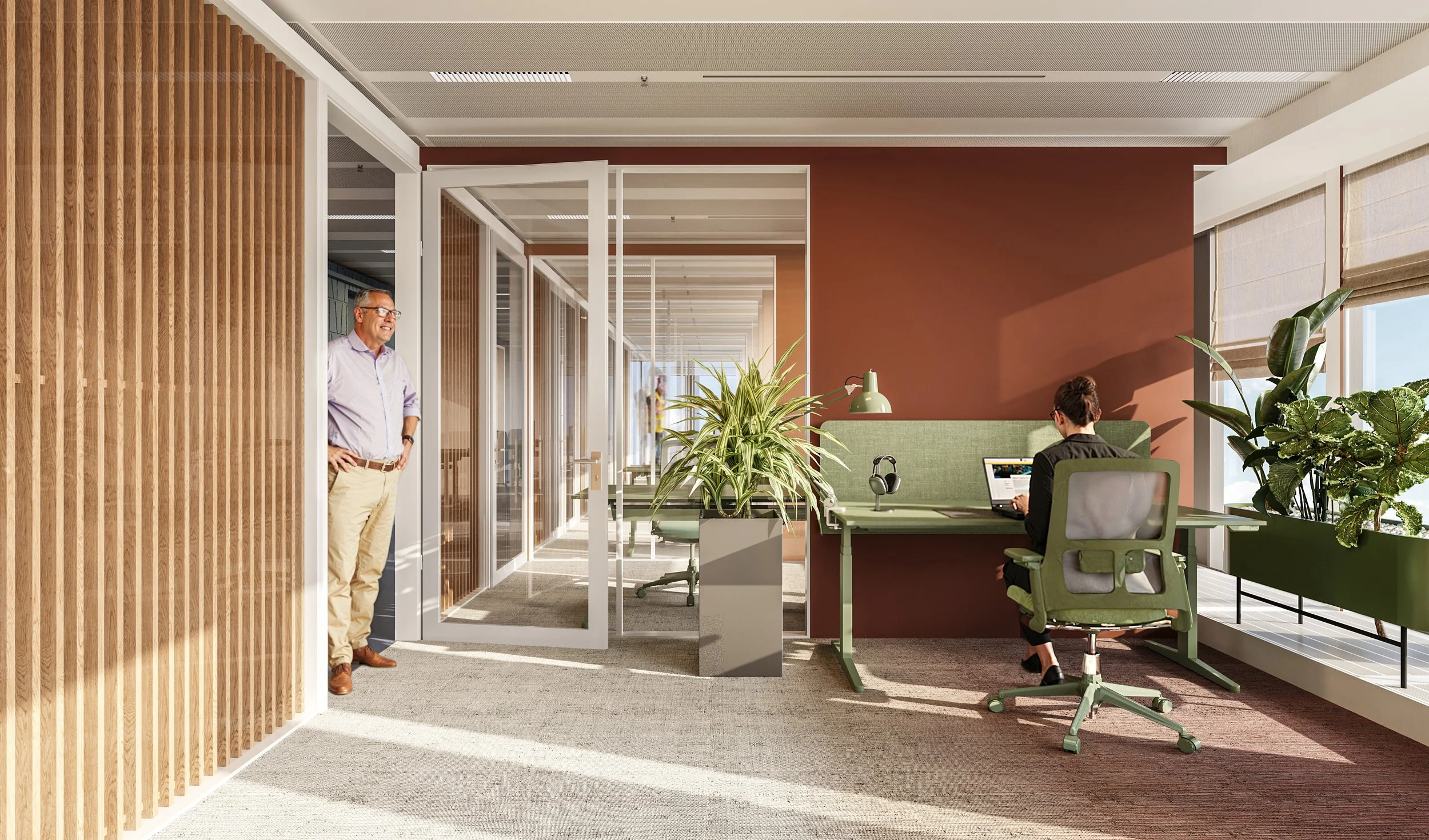
Quiet, library-like workspaces along the facade support deep concentration.
Natural textures, soft lighting and acoustic zoning create a calm atmosphere, while compact meeting rooms offer privacy without isolation.
“Movement becomes purposeful, not distracting each zone supports a different kind of thinking.”
Atmosphere & Materiality
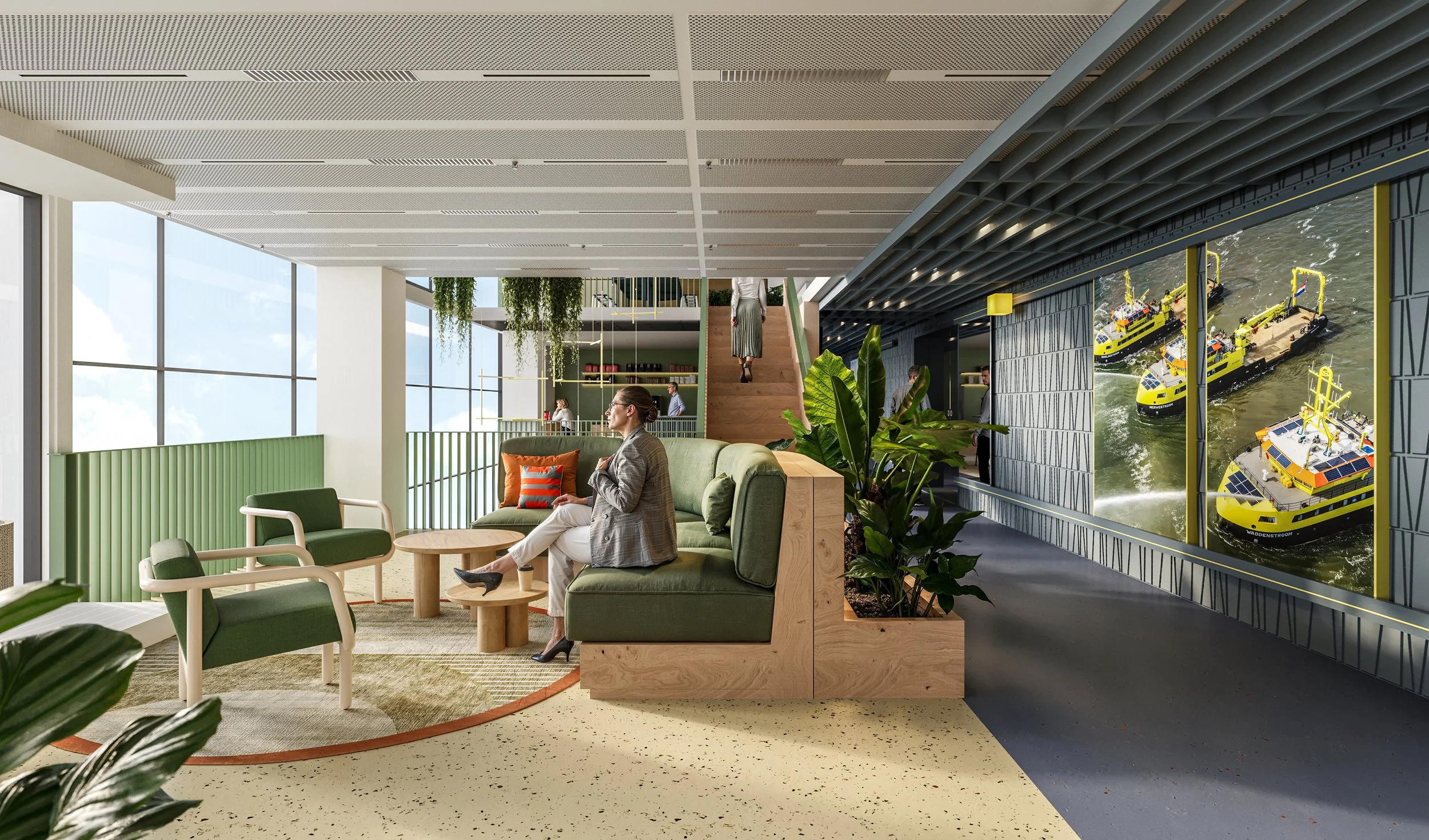
A workplace that feels grounded, warm and coherent.
Government buildings often risk feeling overly technical or impersonal. To counter this, the proposal uses:
timber accents for warmth
greenery for softness and rhythm
acoustic wall elements for sensory calm
controlled sightlines for visual clarity
gentle colour gradients to distinguish zones
The result balances robustness with tactility - durable enough for intensive project work yet welcoming enough for long days on-site.
“A calm environment creates the conditions for better work.
Circularity & Responsible Design
Circularity is not an add-on, it is integrated into every layer of the proposal.
Working with Ahrend’s circularity team, we incorporated:
refurbished workstation frames with new, durable tops
Baux and PET-felt acoustic systems from recycled materials
biobased components in select furniture pieces
a frame system designed for disassembly and reuse
take-back programmes for existing floor finishes and furnishings
This approach reduces environmental impact while keeping the design adaptable for future organisational needs
Inclusivity & Accessibility
Designing for every user, naturally.
The co-creation zone includes low work surfaces, wheelchair-accessible whiteboards, and circulation designed for smooth movement. Access and ergonomics are built into the architecture of the space not offered as exceptions.
“A collaborative environment must be comfortable and intuitive for everyone.”
A workplace like this is ultimately about creating the right conditions for teams to do their best work - spaces that feel clear, supportive and grounded. The Westraven proposal brings these elements together with a calm logic, allowing collaboration and concentration to sit comfortably side by side. It is a clear expression of how thoughtful zoning, material warmth and circular thinking can shape the everyday experience of a large, multidisciplinary organisation